Sendcloud is one of the best-known shipping platforms in Europe, and for many online stores it is the first tool they use to print labels and connect carriers. But as your order volume grows, you start selling in more markets or you add separate apps for tracking, returns and customer service, it is normal to ask whether it is still the right fit.
Choosing the wrong replacement is expensive: migrations take time, and a platform that looks cheap on paper can end up costing more once label fees, user limits and extra tools are added. That is why it pays to compare Sendcloud alternatives on what really changes as you scale, not just on the entry price.
In this guide we compare the 6 best Sendcloud competitors in 2026, with prices and features checked on each vendor's own website, and explain how to pick the one that matches your volume and markets.
In short: Sendcloud alternatives in 30 seconds
- For high-volume and growing eCommerce: Outvio, with shipping, tracking, returns, exchanges and a helpdesk in one platform.
- For US label printing and a shipping API: Shippo.
- For cross-border shipping with duties: Easyship.
- For no subscription: Packlink PRO. For the Benelux: MyParcel. For modular tracking and shipping apps: AfterShip.
What are the best Sendcloud alternatives in 2026?
This table compares the 6 alternatives, with Sendcloud in the last row as a reference. All of them connect to multiple carriers and support shipping rules, so the columns focus on where they differ.
| Tool | Carriers | Rules | Bulk labels | Customs | Returns | Integrations | From | Helpdesk |
|---|---|---|---|---|---|---|---|---|
| Outvio | 90+ | ✓ | ✓ | ✓ | Portal, exchanges | 30+ CMS | Custom | ✓ |
| Shippo | 40+ | ✓ | ✓ | ✓ | Labels | ? | Free · $19/mo | — |
| Easyship | 550+ | ✓ | ✓ | ✓ | Labels | 60+ | Free · $29/mo | — |
| Packlink PRO | 30+ | ✓ | ✓ | ✓ | Labels | ? | Pay per shipment | — |
| MyParcel | ? | ✓ | Add-on | ? | Portal | 30+ | Free · €25/mo | — |
| AfterShip Shipping | 100+ | ✓ | ✓ | ? | Separate app | ? | $9/mo | — |
| Sendcloud (ref.) | 80+ | ✓ | ? | ✓ | Portal (Growth) | 50+ | Free · €28/mo | — |
What is Sendcloud and when do you need an alternative?
Sendcloud is a shipping platform for eCommerce used by many small and medium-sized online stores in Europe. It connects your store to carriers, creates labels in bulk and applies shipping rules. Higher plans add a branded tracking page and returns portal. Sendcloud says you can connect to 80+ carriers through its API or 50+ integrations.
It is a solid way to get started. Most teams start comparing Sendcloud competitors when label volume, users or post-purchase needs outgrow their plan.
Sendcloud pricing in 2026
Sendcloud pricing combines a monthly subscription with a fee per label. These are the plans on Sendcloud's pricing page in October 2026 (monthly billing, excluding VAT):
- Free: €0, up to 20 parcels a month.
- Lite: €28/month + €0.10 per label. 3 users, 5 shipping rules, up to 4,800 labels a year.
- Growth: €87/month + €0.09 per label. 5 users, 10 shipping rules, up to 12,000 labels a year, branded tracking page and returns portal.
- Premium: €175/month + €0.08 per label. 10 users, unlimited shipping rules, up to 120,000 labels a year, advanced returns management.
- Pro: €639/month + €0.07 per label. Unlimited users, up to 360,000 labels a year.
- Enterprise: custom pricing.
Yearly billing is 20% cheaper. As an example, 1,000 parcels a month on Growth costs about €177 a month (€87 + 1,000 × €0.09), and that volume already reaches the plan's 12,000-label yearly cap.
Signs you need an alternative to Sendcloud
Sendcloud works well for many stores. These are the most common signs that it is time to compare alternatives:
- You keep hitting plan limits. Label caps, users or shipping rules push you to the next tier sooner than planned.
- Per-label fees add up. At higher volumes, the label fee can cost more than the subscription itself.
- You pay for several post-purchase tools. Tracking, returns, exchanges and customer service live in separate apps, each with its own cost and login.
- Refunds eat into revenue. You want customers to choose an exchange or store credit instead of a refund, on every sales channel.
- Customer service lives elsewhere. Agents switch between a helpdesk and the shipping tool to answer order questions.
- You run several stores, warehouses or clients. You need separate rules, branding and reporting for each one.
6 top-rated alternatives to Sendcloud you should consider
These are the established platforms that eCommerce teams most often compare with Sendcloud, ordered from the most complete post-purchase suite to more specialised tools.
1. Outvio: the best Sendcloud alternative for high-volume and growing eCommerce

Outvio is a post-purchase platform for eCommerce brands and 3PLs. It brings shipping, tracking, returns and customer service into one system, so you don't need a separate app for each step.
On shipping, you connect 90+ couriers and let carrier selection rules choose by destination, cost or delivery speed. Smart shipping rules and order merging automate routine work, bulk labels and automatic customs documents save time, and on-screen picking lists and paperless packing speed up the warehouse.
After dispatch, customers get branded tracking pages and notifications by email, SMS and WhatsApp. The returns portal carries your branding too, and instant exchanges let customers swap for another item, even a higher-value one, instead of asking for a refund. You can also promote store credit over refunds.
Customer service runs in Outvio Desk, a helpdesk with unlimited agents, tickets and automations, branded live chat, and Facebook, WhatsApp and Instagram in one inbox.
- Best for: high-volume and growing eCommerce brands, multi-store retailers and 3PLs.
- Pricing: Custom, with an order processing fee per processed order rather than per printed label.
2. Shippo

Shippo is a shipping platform and API, popular with US merchants and developers. Even the free plan includes discounted USPS, UPS, FedEx and DHL Express rates and unlimited store connections, and you can compare rates across 40+ carriers.
The Pro plan adds branded tracking pages, notification emails and packing slips. Returns are handled with return labels, and customs forms and commercial invoices are included for international parcels.
- Best for: small and mid-sized stores that ship mainly in the US, and developers who want a shipping API.
- Pricing: Starter is free for up to 30 labels a month. Pro starts at $19/month ($17/month billed annually) for up to 200 labels. Premier is custom.
3. Easyship

Easyship focuses on international shipping. It gives access to 550+ courier services, prepares customs documents and calculates import taxes and duties, which you can show at checkout.
Depending on the plan, you also get shipping rules and automations, a branded tracking page, batch label printing, pick lists and packing slips. Returns work through return labels, including pre-paid ones on higher plans.
- Best for: brands that ship cross-border and want duties and customs handled.
- Pricing: free for up to 50 shipments a month. Plus $29/month (500 shipments), Premier $69/month (2,500) and Scale $99/month (5,000).
4. Packlink PRO
Packlink PRO is a shipping platform for online sellers with no subscription: you pay only for the shipments you buy.
It connects to marketplaces such as Amazon, eBay, Etsy and AliExpress and to webshop platforms like Shopify, WooCommerce and PrestaShop. You choose from 30+ carriers, set shipping rules, pay for and print shipments in bulk, and track parcels from one dashboard. Customers can receive status emails, and you can create a return label from each shipment's details page.
- Best for: small sellers and marketplace merchants who want no monthly fee.
- Pricing: no subscription; you pay per shipment.
5. MyParcel
MyParcel is a shipping platform for webshops in the Netherlands and Belgium. You ship with MyParcel's rates, including PostNL, or on your own contract with DHL, UPS, DPD, GLS or Trunkrs through the MyContracts add-on.
Plans include unlimited labels, 30+ webshop and marketplace integrations, delivery options at checkout, and track & trace and a returns portal in your own house style. Shipping rules automate carrier choice. Order management with picking lists and packing slips (MyOrders) and automatic return approvals (MyReturns) are paid add-ons.
- Best for: Dutch and Belgian webshops shipping mainly within the Benelux.
- Pricing: Standaard plan €0/month. Paid plans run from €25/month (Start) to €625/month (Enterprise) and add a discount per shipment. MyOrders and MyReturns start at €20/month each.
6. AfterShip

AfterShip is best known for shipment tracking. It tracks parcels across 2,000+ carriers and offers a branded tracking page, with separate products for returns and shipping.
AfterShip Returns includes refunds and exchanges, refunds to store credit and a branded returns page. AfterShip Shipping creates labels in bulk with 100+ carriers and adds automation settings on higher plans.
- Best for: brands that already have a shipping setup and want stronger tracking and returns.
- Pricing: priced per product. Shipping from $9/month, Returns from $16/month and Tracking from $29/month (Essentials plans).
How to choose the right Sendcloud alternative
Start with your order volume and the problems you want to remove, not the subscription price. Use the comparison table above for a first shortlist, then check these criteria:
- Carriers and markets: check that the platform supports the carriers and countries you ship to, and lets you use your own carrier contracts.
- Shipping automation: look for rules that choose the carrier by destination, weight, cost or delivery speed, and that merge orders automatically.
- Post-purchase experience: branded tracking pages and notifications keep the delivery experience consistent with your store.
- Returns and exchanges: a self-service portal with exchanges and store credit keeps more revenue than refunds alone.
- Customer service: decide whether you want a helpdesk in the same platform as shipping and returns, or a separate tool.
- Integrations: confirm native connections to your eCommerce platform, marketplaces, ERP or WMS, plus API access.
- Scalability: check label caps, user limits, warehouses and multi-store support before you outgrow a plan. If you are a 3PL, also check that each client can have its own rules, branding and reporting.
Subscription vs total cost
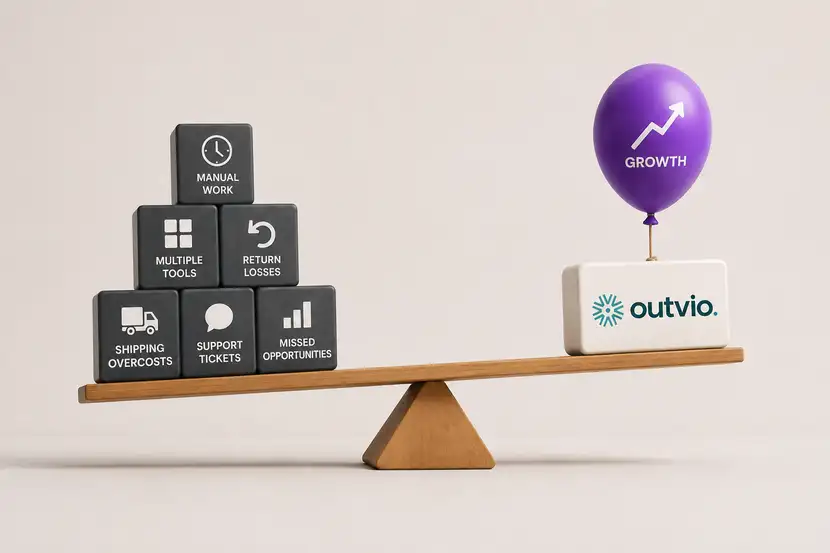
The cheapest plan is not always the cheapest to run. Entry plans can leave out key modules, charge per label or user, or leave you paying for separate tracking, returns and helpdesk tools.
A simple way to compare: total cost = subscription + label and user fees + extra tools + manual work + avoidable refunds.
Pro Tip
For a small store with simple shipping, a free or low-cost label tool can be the most economical option. As volume grows, automation, exchanges and fewer tools usually matter more than the subscription price.
Tips for migrating from Sendcloud
Moving away from Sendcloud doesn't have to disrupt your operations. Plan the switch in steps:
- Map what you use today. List carriers and contracts, shipping rules, integrations, users, and the tracking and returns settings you rely on.
- Rebuild your rules first. Recreate carrier and shipping rules in the new platform and test them with real orders.
- Connect carriers and stores. Add your own carrier contracts and connect your stores and marketplaces before you move labels over.
- Brand your post-purchase pages. Set up tracking pages, notifications and the returns portal so customers see a consistent experience.
- Run both tools in parallel. Ship part of your orders with the new platform for a week or two, then switch fully.
- Keep Sendcloud active for open returns. Close in-transit parcels and open returns before you cancel your plan.
- Train your team. Walk warehouse and customer service teams through the new workflows before peak season.
What changes when you switch from Sendcloud to Outvio at volume
At a few hundred parcels a month, a label tool is enough. At several thousand, the cost of Sendcloud is no longer the subscription: it is the per-label fee on every parcel, the plan caps that force upgrades, and the separate apps you pay for tracking, returns and support.
With Outvio, pricing follows processed orders, not printed labels, so an order split into several parcels doesn't multiply your fees. You get 90+ couriers under one set of shipping rules, bulk labels and automatic customs documents, with unlimited warehouses, couriers and users as you add markets and stores.
The work after dispatch moves into the same platform. Branded tracking and notifications cut “where is my order?” emails, the returns portal steers customers towards exchanges and store credit instead of refunds, and the helpdesk answers the rest with unlimited agents. For 3PLs, each client gets its own rules, branding and reporting from one dashboard.
Fewer tools, fewer manual steps and more revenue kept after returns. See the Outvio vs Sendcloud comparison for the details, or book a demo to run Outvio with your own order volume.